How GRC Helps Institutions Unify Governance, Compliance, and Decision-Making
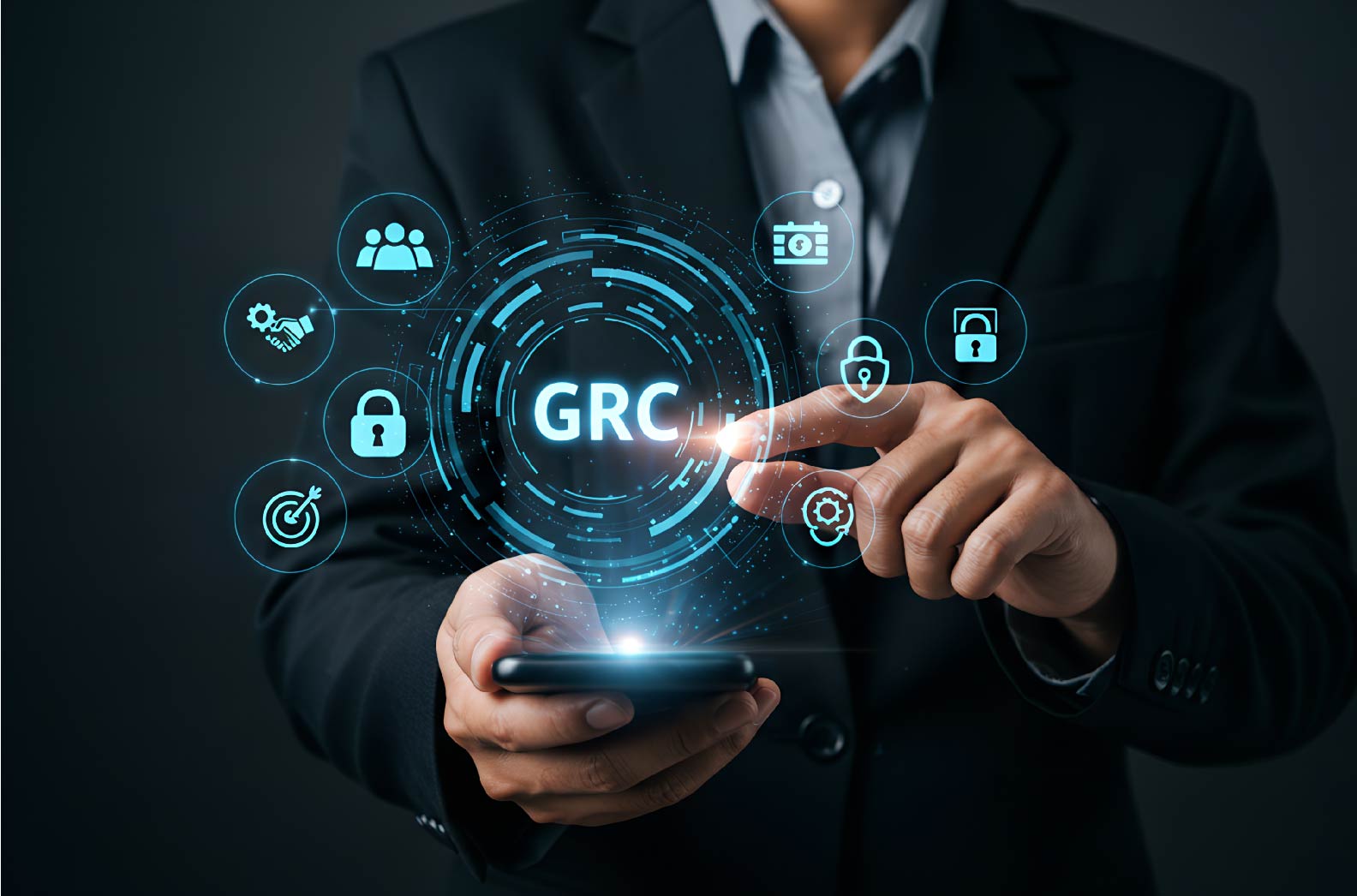
An institution may have clear policies, a risk register, and an active compliance team, yet management can still receive an incomplete picture when a decision is needed. Risk management may record a risk, compliance may track a related requirement, while another function operates the relevant control with no clear link between them. The result is duplicated work, inconsistent reporting, and delayed action. GRC connects requirements, risks, controls, responsibilities, and decisions in one framework. Read on to see how GRC helps institutions unify governance and compliance and improve decision quality.
What Does GRC Integration Mean in Practice?
GRC integration does not mean placing every function under one department: Governance, risk, compliance, and internal audit can remain separate while using shared concepts and connected information flows. OCEG likewise presents GRC as interconnected capabilities that support objectives, address uncertainty, and promote integrity.
The aim is to close information gaps: A risk may be recorded by one function, a related requirement monitored by another, and a control operated elsewhere. Connecting them shows whether controls are sufficient and where gaps remain.
Common terminology prevents conflicting interpretations: Shared definitions for risks, controls, exceptions, and priorities make reports easier to compare and reduce conflicting assessments reaching leadership.
Accountability stays with the owner: Integration does not move responsibility to a central team. Operational management remains responsible for activities and controls within its scope.
Technology supports the framework: Effective GRC starts with clear roles, policies, information structures, and escalation paths before any platform is selected.
How Does GRC Connect Policies, Controls, and Risks?
The connection starts with requirements: A regulation, policy, or contractual obligation must translate into clear actions, ownership, and evidence.
Each requirement links to the right controls: One control may support several requirements, while one requirement may need several controls. Mapping these links reduces duplication and improves monitoring.
Controls link to the risks they address: Decision-makers need to know which risk a control mitigates, how significant that risk is, and whether the control works in practice.
Exceptions link to decision owners: When a control fails or non-compliance occurs, the reviewer, escalation level, and corrective action should be clear.
A traceable record is maintained: Linking the requirement, policy, control, owner, and evidence makes reviews easier and reduces time spent locating information.
What Happens?
What Does GRC Reveal?
What Decision Becomes Possible?
A new requirement is issued
Affected policies, controls, processes, and owners
Identify required changes and implementation priority
An existing risk increases
Current controls, their adequacy, and open actions
Strengthen the response or escalate the risk
A control fails
Risks and requirements that depend on it
Assess the impact and begin remediation
Non-compliance occurs
Cause, owner, and related controls
Determine escalation and corrective action
A review is completed
Findings, corrective actions, and owners
Track what is complete and what still needs action
How Does GRC Improve Information Quality and Decision-Making?
It gives decisions full context: Expanding into a new service or market may involve regulatory requirements, operational risks, controls, and financial and operational data.
When assessing a new service launch, the institution can view requirements, risks, controls, gaps, and responsible functions together rather than rely on a financial or operational view alone.
It distinguishes between having a control and having an effective one: A documented policy does not prove that a control works. Testing and review show its actual effectiveness and give management a better basis for selecting the right response.
It reduces conflicting reports: Common definitions and reference sources reduce different assessments of the same risk reaching leadership.
It highlights significant exceptions: Senior management can focus on deviations beyond accepted limits, their impact, ownership, and required action instead of monitoring every control.
It links change to affected functions: When a requirement or risk changes, the institution can identify affected policies, controls, processes, and owners before a problem emerges.
GRC does not make decisions for leadership. It helps relevant information reach decision-makers in a connected and traceable form.
How Are Roles and Oversight Distributed Without Overlap?
Operational management owns the risks related to its work: The function running the process is closest to its controls, risks, and deviations.
Risk and compliance functions provide support and oversight: They set frameworks, monitor adherence, and review risk management without taking over operational responsibilities.
Internal audit provides independent assurance: It assesses governance, risk management, compliance, and controls independently from execution.
Senior management needs focused reporting: Reports should highlight major risks, non-compliance, control effectiveness, overdue actions, and required decisions.
Coordination does not remove independence: Functions can share information and coordinate reviews while maintaining the boundaries needed for objectivity. This aligns with the Three Lines Model.
GRC is unlikely to succeed when treated as a technology project owned by one team. It requires clear roles, defined ownership of risks and controls, and appropriate escalation and assurance channels.
What Are the Main GRC Integration Challenges and How Can Institutions Address Them?
Multiple registers and inconsistent definitions: Identify existing sources, standardize terminology, and classify risks, controls, and requirements before moving them into a central platform.
Duplicate controls: Review controls against the risks and requirements they support, then consolidate similar controls where appropriate.
Unclear ownership: Assign an owner to each risk, control, and corrective action, with clear authority and escalation points.
Treating compliance as a checklist: Effective monitoring focuses on evidence, control effectiveness, and outcomes rather than task completion alone. ISO 37301 treats compliance as a management system requiring development, implementation, evaluation, maintenance, and continual improvement.
Technology comes after the operating model: Choosing a platform before defining roles, data, and workflows may only digitize existing problems. Design the operating model first, then select the technology that supports it.
GRC moves governance, risk, and compliance from parallel activities into a connected framework linking requirements, policies, controls, risks, and decisions. Its value appears when leadership can trace information, identify ownership, and determine whether an issue needs monitoring, escalation, or a new decision. Governance, risk, and compliance then become part of how the institution operates rather than separate files reviewed independently. Synexcell Management Consultancy supports institutions in developing governance, risk, and compliance frameworks and designing policies, controls, roles, and monitoring mechanisms suited to their activities and maturity level.
Contact Synexcell to build a GRC framework that connects governance, risk, and compliance with the information and decisions your institution actually needs.
Frequently Asked Questions
What is the difference between GRC integration and merging governance, risk, and compliance functions?
Integration connects information, terminology, controls, and monitoring processes while the functions remain independent in their roles.
How should an institution begin integrating governance, risk, and compliance data?
Identify current registers, requirements, policies, and controls, then map their relationships and owners before choosing a platform.
What does linking a requirement to a control mean?
It means identifying the action used to meet a requirement and documenting its owner, evidence, and monitoring results.
How does GRC support senior management decision-making?
It brings risks, requirements, controls, and exceptions into one context that helps management set priorities and identify required action.
How does Synexcell support institutions in developing a GRC framework?
Synexcell helps institutions assess the current state, design roles, policies, controls, and monitoring processes, and build a framework suited to their operating environment and maturity level.