
It is not unusual for two institutions to put up the same amount of effort yet have different outcomes. One delivers clearer results and stronger returns, while the other shows slower progress. The difference becomes clear in how KPIs and OKRs are used. While OKRs concentrate on focusing efforts toward specific and achievable strategic goals, KPIs are a useful tool for monitoring institutional performance. To make the most of both, it is necessary to understand how they differ and how they help achieve concrete outcomes in the Kingdom’s current workplace. Keep scrolling to learn all that your institution needs regarding KPIs and OKRs.
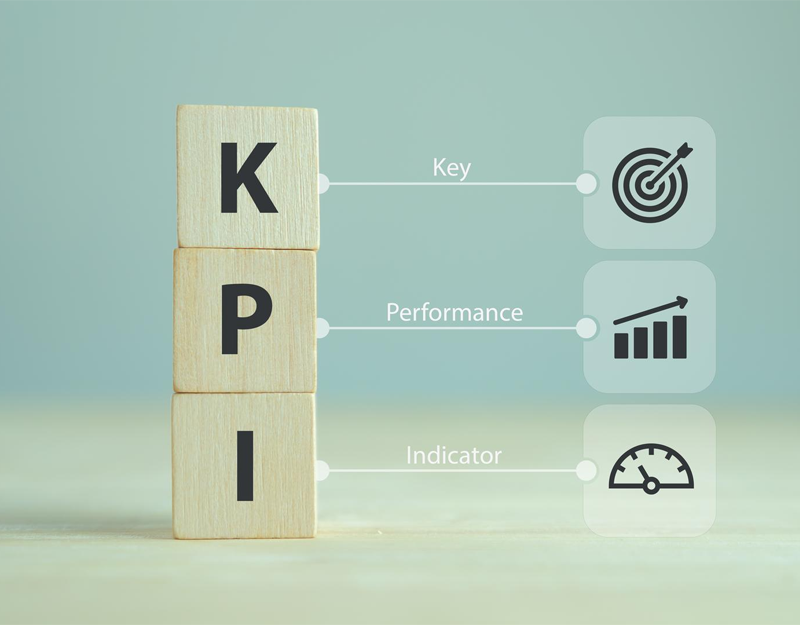
Key Performance Indicators are measurement tools that monitor performance on an ongoing basis. They help determine whether daily operations are moving in the right direction.
Key characteristics:
They are used to measure:
How Key Performance Indicators are applied:
They provide a clear reflection of operational reality and highlight institutional performance.
The table below shows how KPIs are applied across different functions:
| Section | Example | Measurement Indicator |
| Sales | Monthly growth rate | Percentage increase in revenue |
| Customer Care | Employee response time | Average time per request |
| Marketing | Conversion rate | Customers compared to total visitors |
Learn more about performance indicators and how they achieve operational excellence from here.
OKRs are a framework that connects major goals with measurable results within institutional operations and focuses on driving change and development.
Components:
Key characteristics:
Real-life example:
Objective: Improve customer experience
Key Results:
How to apply OKRs:
Check the table below to understand the main differences between the two concepts and where each tool can be applied through a balanced approach to gain positive results in your institution:
| Comparison Aspect | KPIs | OKRs |
| Purpose | Measure current institutional performance | Develop and improve institutional operations |
| Focus | Operational stability and efficiency | Institutional development and excellence |
| Flexibility | Relatively stable | Adaptable based on targeted change |
| Benefit | Visible in daily operations | Strengthens strategic planning |
Choosing the right tool depends on the institution’s current situation and the role that needs to be fulfilled.
Use key performance indicators when you wish to:
Use OKRs when you need to:
Synexcell experts recommend using both tools in a balanced way to monitor operational performance while driving development at the same time.
Applying these tools effectively within institutional operations transforms metrics and indicators into a cohesive work environment that combines performance tracking with continuous development.
Applying key performance indicators and OKRs means:
Their impact on teams:
This is where working with a specialized institution becomes valuable to help implement these models in a balanced way and build integrated performance systems with a real impact reflected in revenue reports.
Key challenges institutions may face when applying these tools include:
Common mistakes:
Institutional maturity is strengthened by adopting practical approaches, including:
Important tips:
Real-life example:
KPI: Increase sales by 10%
OKR:
Integrating these tools creates a balance between maintaining stability and driving the development of institutional services.
Choosing between KPIs and OKRs , or aligning them together, is not about following a fixed model when deciding wether to use KPIs, OKRs or aligning them. It involves comprehending the demands of the institution and the nature of its objectives. Each tool has a distinct function, and when applied properly, they form a practical approach that improves performance, supports stability, and strengthens efficiency, and increases efficiency inside the institution.
Through guiding institutions in implementing performance measurement tools in a balanced manner that results in greater revenues and stability backed by a clearer vision, Synexcell offers management consulting services that combine professional alignment with strategic thinking to achieve institutional excellence.
Contact our experts at Synexcell.
What is the difference between KPIs and OKRs?
Key performance indicators are used to measure current performance and track operational efficiency, while OKRs focus on setting clear goals and linking them to measurable results that drive real progress within a defined timeframe.
Can KPIs and OKRs be used together?
Yes, key performance indicators can be used to monitor daily performance and ensure stability, while OKRs are used at the same time to direct efforts toward achieving strategic goals, creating a practical balance between operational efficiency and development.
How many KPIs should an institution use?
It is best to select a limited number of indicators that reflect the most important performance priorities to keep tracking clear and manageable without unnecessary complexity.
Are OKRs suitable for all institutions?
Yes, they can be applied across different sectors by adjusting how objectives and results are defined to match the nature and size of each institution.
What is the most important factor for successful implementation?
Clear objectives, consistent follow-up, and team involvement are key factors in achieving realistic and continuously improving results.