

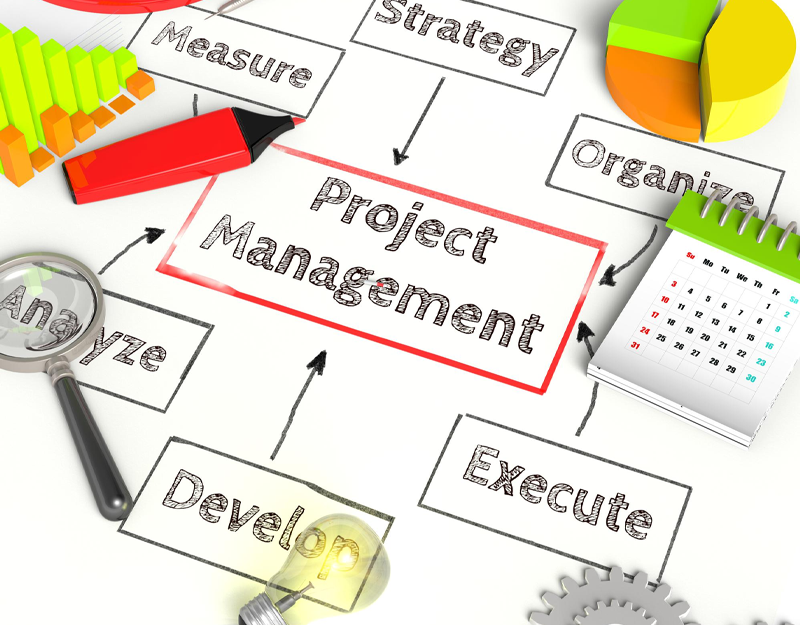
In discussions with project managers, senior management often asks why some projects move smoothly and achieve their goals, while others struggle despite having the required resources and plans. In many circumstances, the issue is not a lack of available capabilities within the institution, but rather how the job is managed and coordinated. This is where project management methodologies become essential. They direct individual efforts into a clearer and more structured path. Institutions can use project management methodologies to streamline workflows, reduce uncertainty, and increase execution efficiency from the earliest planning stage to reporting and performance evaluation.
Project management methodologies are a set of frameworks and approaches that institutions use to organize project phases, from planning through execution and monitoring.
Key characteristics:
Roles of project management methodologies:
Applying project management methodologies creates a more structured work environment where individual improvisation is reduced, minimizing the likelihood of project disruption. Read more about project management methodology here.
Project management methodologies directly influence the quality of operational performance within an institution, as they determine whether projects succeed or fall short.
Key benefits:
Their direct impact is reflected in:
Project management approaches continue to evolve as the nature of work changes, making it important to understand and apply different types of project management methodologies. The table below highlights the key differences between traditional and modern approaches.
| Comparison | Traditional Project Management | Modern Project Management |
| Flexibility | Based on fixed plans that are difficult to adjust | Allows adaptation as needed |
| Execution Style | Follows sequential steps | Follows short, iterative cycles |
| Adaptability | More difficult | More flexible as change is an integral part |
The table below outlines several models of project management methodologies that have proven effective across different sectors.
| Project Management Model | Key Features |
| Agile | Focuses on flexibility and continuous improvement, suitable for projects that require frequent updates and ongoing adaptation |
| Scrum | Divides work into short cycles, allowing regular progress tracking and continuous performance improvement |
| Kanban | Uses visual workflow management to track tasks and quickly identify bottlenecks |
| Lean | Focuses on reducing waste and improving efficiency by prioritizing activities that deliver real value |
Understanding the differences between project management methodologies is essential before selecting the most suitable model for your institution.
Ask the following questions when selecting project management methodologies for your projects:
Practical steps:
Project management methodologies improve efficiency by:
Key challenges institutions may face:
Practical solutions:
Steps for applying project management methodologies:
Mistakes to avoid when selecting and applying project management methodologies:
Adopting the right project management methodologies helps institutions improve efficiency and deliver projects with measurable impact. Structured techniques enable institutions to adapt to workplace changes and achieve their goals more effectively. Synexcell management consultancy helps institutions assess their current position and design the most suitable approach to ensure project success and achieve stronger results.
Contact Synexcell professionals to start reevaluating how your institution manages projects.
What are project management methodologies?
They are structured approaches used to plan, execute, and monitor projects in a way that supports institutions in achieving their objectives with clarity and efficiency.
Can more than one methodology be used in the same project?
Yes, different approaches can be combined depending on the nature of the project, provided they are applied in a clear and balanced way.
What is the best project management methodology?
This depends on the project type, team size, and objectives, as there is no single methodology that fits all projects.
Do all projects require project management methodologies?
It is recommended to use them, as they improve institutional performance and reduce errors, especially in more complex projects.
What is the main reason for failure in applying project management methodologies?
Failure is often due to weak implementation or a lack of clarity in objectives.